
Operations
Factoring 101: How Carriers Get Paid Faster
Brokers pay on net-30 to net-45. Trucks don't run on net-30. Here's how factoring closes that gap.
Read articleOperations
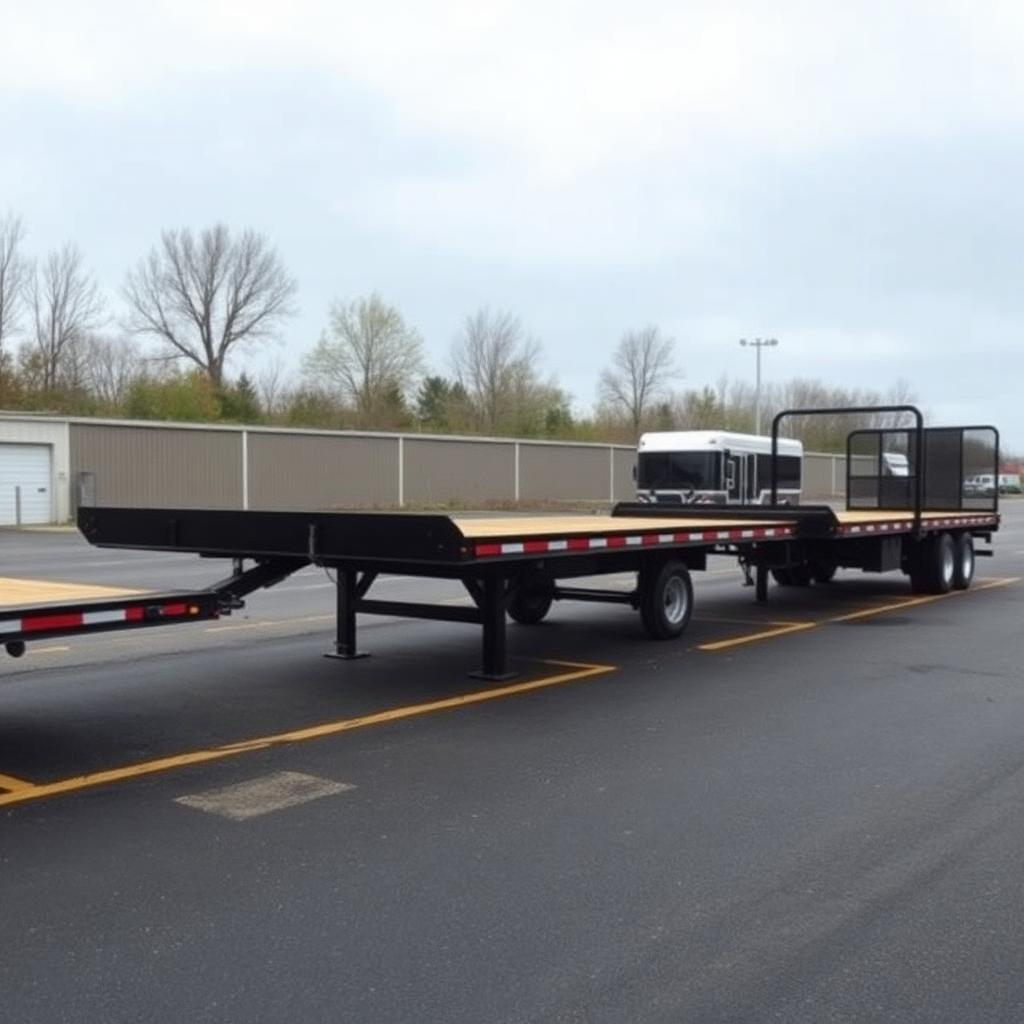
The trailer determines what you can haul and how much you get paid. Here's how the main types compare.
A hot-shot truck without the right trailer is just a pickup. The trailer is what unlocks the freight — and the wrong one limits which loads you can book.
The workhorse. Better weight distribution than a bumper-pull, easier to maneuver tight backs, and the industry standard for commercial hot-shot. Most professional operators run a 40-foot gooseneck with hydraulic dovetail or a Mega Ramp option.
Cheaper to buy, lighter, and easier for new drivers — but limited in length and payload. Fine as a starter; rarely the trailer that pays back the investment.
Flat deck above the wheels — wider load surface, better for equipment that doesn't fit between fenders. Slightly higher load height, which matters for taller freight clearing bridges.
For commercial hot-shot under the Grand Line model, a 40-foot gooseneck flatbed with MAX ramps, LED lighting, and 12k-lb torsion axles is the configuration that books the most freight at the best rates.
More from Education
Operations
Brokers pay on net-30 to net-45. Trucks don't run on net-30. Here's how factoring closes that gap.
Read articleOperations
Hot-shot revenue isn't linear. Understanding why makes the year easier to plan and easier to read.
Read articleOperations
Not every one-ton dually is equal. The right spec earns more, breaks less, and holds its value longer.
Read article